Points of interest…
- 137 million Americans live in mental health professional shortage areas
- Ohio’s OBHS grant offers up to $15,000 yearly and zero tuition
- Service obligations equal years of funding in approved behavioral health settings
Roughly 137 million Americans live in Mental Health Professional Shortage Areas, and MSW graduates are often the primary clinical providers in these communities. High tuition costs deter many from entering the field at a time when demand for behavioral health services is acute.
A 2026 award of $450,000 to Bluffton University’s online MSW program, detailed by the Bluffton Icon, reduces tuition to $0 after institutional aid for up to 30 students and illustrates how targeted MSW financial aid and scholarships are removing that barrier. As similar state and federal programs expand, the credential is becoming more attainable, but each award carries a service commitment that defines where graduates practice.
The Behavioral Health Workforce Shortage and the Role of MSW Grants
The behavioral health workforce crisis is no longer a distant warning; it is a present-day reality affecting millions. As of 2025, 137 million people, roughly 40% of the U.S. population, live in federally designated Mental Health Professional Shortage Areas (HPSAs)1. Across more than 6,800 HPSA locations2, only about 26 to 27% of the need for mental health providers is being met, leaving an immediate gap of approximately 6,800 practitioners just to reach minimum coverage standards1. Looking ahead, the Health Resources and Services Administration projects that the national shortfall will widen dramatically, with an estimated 62,060 mental health and substance use social workers needed by the late 2030s, alongside nearly 100,000 additional counselors and psychologists1.
A Crisis in Numbers
The pipeline simply cannot keep pace with demand. Substance abuse, behavioral disorder, and mental health counselors alone are projected to see a 17% growth rate from 2024 to 2034, translating to about 48,300 annual openings4. By 2026, 27 states are expected to face severe behavioral health workforce shortages. Meanwhile, just half of adults with mental illness reported receiving timely care as recently as 20216, underscoring the distance between need and access.
MSW Professionals as the Frontline Solution
Master of Social Work (MSW) graduates are uniquely positioned to close this gap. Licensed clinical social workers provide the majority of mental health services in community mental health centers, federally qualified health centers, and school-based clinics, settings where social workers in integrated care teams serve underserved populations. Their training emphasizes not only clinical diagnosis and treatment but also case management, advocacy, and systemic change, making them versatile responders to complex behavioral health needs.
Grants as a Strategic Pipeline Investment
This is where targeted social work grants and scholarships enter the picture. Programs like Ohio's Behavioral Health Scholarship, which covers tuition and provides living stipends in exchange for a service commitment in eligible settings, are a direct policy lever to counteract the shortage. By removing financial barriers, these awards accelerate entry into the workforce and channel graduates into the most affected communities. The strategy is straightforward: invest in education upfront to build a stable, committed workforce downstream. Without such intentional funding, the behavioral health system risks leaving millions without care.
Types of MSW Funding: How Grants, Scholarships, and Stipends Bridge the Gap
What types of funding are actually available for MSW students beyond federal loans, and how do you track them down in 2026? With new appropriations flowing into behavioral health workforce pipelines, the answer includes a mix of federal workforce grants, state scholarship-for-service programs, institutional tuition discounts, and association-sponsored stipends. The challenge is knowing where each lives and checking them regularly, because deadlines and award amounts shift year to year.
Federal and State Grant Programs: Start with Official Databases
Many MSW grants flow through federal agencies like the Health Resources and Services Administration (HRSA) and the National Health Service Corps (NHSC). Their websites post current award cycles, eligibility, and service obligations. State-level behavioral health departments also maintain lists of active scholarships, and Ohio’s Behavioral Health Scholarship (OBHS) is one example. To find less centralized opportunities, you can use: - Federal resources like Grants.gov, which aggregates thousands of funding notices. - The Bureau of Labor Statistics (BLS) site, which links to workforce development funding databases and related state portals. These tools let you filter by profession (social work), location (state, county), and award type (scholarship, stipend, loan repayment). Checking them quarterly ensures you do not miss short application windows.
Agency-Specific MSW Stipend and Scholarship Programs
Several named programs are among the most reliable sources for MSW funding, especially for students committed to underserved communities: - HRSA BHWET (Behavioral Health Workforce Education and Training): Provides stipends and training support for clinical social work students placed in community-based settings. - NHSC (National Health Service Corps) Substance Use Disorder Workforce Loan Repayment Program: Offers loan repayment for social workers in eligible facilities. - CSWE MFP (Council on Social Work Education Minority Fellowship Program): Awards stipends to master’s students focused on mental health or substance abuse. - State models: California’s CalSWEC and SWECE, Ohio’s OBHS, New York’s CUNY Fellows, and California’s HCAI scholarships run their own cycles with state-specific residency and practice requirements. For each, the official program website lists exact award amounts, eligibility criteria, and annual deadlines. Contact the program directly if any detail is unclear.
Institutional Aid and Direct Student Benefits
Many MSW programs convert external grants into immediate tuition reductions or living stipends for their enrolled students, information not always obvious from a university’s main financial aid page. Steps to uncover these: - Visit the MSW program’s dedicated scholarships page and review any “ending in 2026” or “new for 2026” designations. - Call the admissions office and ask: “Has the school received any expansion grants that are being passed through as student stipends or tuition discounts?” - Inquire about internship stipends; some grants now cover field placement costs or travel. A financial aid counselor can confirm whether a recent award, like the Ohio Behavioral Health Scholarship at Bluffton University, has set a precedent for zero-tuition pathways or monthly living stipends.
Professional Associations and Timely Updates
The National Association of Social Workers (NASW) and CSWE periodically publish updated listings of social work scholarships, post-MSW clinical fellowships, and employer-based tuition assistance. Their email newsletters and annual conference materials often flag new opportunities before general search engines pick them up. Following their websites and social media feeds gives you a curated feed of MSW-relevant funding.
Many students assume MSW grants only cover tuition, but programs like Ohio’s OBHS, HRSA BHWET, and CalSWEC also fund internship stipends, educational materials, and living expenses. For example, Ohio’s OBHS explicitly allows scholarship dollars to be used for internship stipends, reducing the full financial burden of earning your degree.
Spotlight: Ohio’s Behavioral Health Scholarship and Bluffton University’s $0 Tuition MSW Path
The Ohio Behavioral Health Scholarship (OBHS) is a state-funded graduate scholarship program that directly links financial support with a post-graduation service obligation, targeting the state's shortage of licensed behavioral health professionals, where MSW graduates are in demand. Bluffton University's $450,000 award1 from this program provides a clear case study in how institutional partnerships can eliminate tuition costs entirely while building a pipeline of clinical social workers ready to serve Ohio communities.
How the Award Works at Bluffton University
Through the OBHS, up to 30 Bluffton Master of Social Work (MSW) students will receive annual scholarships of up to $15,000 each. The university then layers institutional aid on top, reducing tuition and general fees to $0 for eligible students. The award, administered by Health Impact Ohio in partnership with the Ohio Department of Behavioral Health and the Ohio Department of Higher Education, runs through December 2028. This means students entering the program now can potentially complete their entire degree with no out-of-pocket tuition costs while also receiving support for internship stipends (a key component of clinical social work internships) and other educational expenses.
Eligibility and Requirements
To qualify, applicants must be Ohio residents, U.S. citizens or permanent residents, enrolled at least half-time in Bluffton's MSW program, and maintaining satisfactory academic progress. The scholarship is not limited to tuition alone; it can cover costs that often deter students from completing fieldwork, such as transportation or childcare during internships. The central trade-off is a service commitment: recipients must work in an eligible Ohio behavioral health setting for a period equal to the number of years they received funding. This could mean a two-year scholarship translates to two years of post-graduation service in a community mental health center, school-based clinic, or similar qualifying site.1
A Model That Removes Financial Barriers
"This award makes the online MSW program more accessible and prepares students to respond to mental health needs of Ohioans," said Dr. Jeanette Harder, MSW program director at Bluffton.1 The $0 tuition structure after institutional aid means students can focus on their education and field placements rather than taking on significant debt. Claire Kleman, vice president of enrollment and communication, emphasized: "The scholarship removes financial barriers and helps meet Ohio's need for behavioral health professionals."1 By blending upfront funding with a clear service pathway, the OBHS mirrors the intent of federal loan forgiveness programs but accelerates entry into the workforce by reducing reliance on repayment plans.
For prospective MSW students weighing the cost of graduate education, Bluffton's OBHS partnership illustrates how state-level investments are creating no-cost pathways to licensure. The OBHS partnership specifically supports Bluffton's mental health specialization, aligning coursework with Ohio's most pressing workforce needs.1
How to Find MSW Grants by State in 2026
Looking for MSW funding? You can chase national scholarships with thousands of applicants, or you can zero in on state-specific grants that often go under the radar, and frequently come with smaller applicant pools and more generous awards.
A State-by-State Directory of MSW Grants in 2026
- California: CalSWEC Stipend Programs , Award: Up to $18,500 annually. Eligibility: MSW students in CalSWEC-affiliated programs; focus on child welfare or public behavioral health, areas with strong MSW behavioral health careers. Service Commitment: Work in California public behavioral health or child welfare for a period equal to funding received.
- California: HCAI Behavioral Health Scholarship , Award: Up to $25,000. Eligibility: Half-time enrollment (min 6 units/term), GPA ≥2.0, commitment to underserved communities in CA. Service Commitment: Post-graduation service in underserved California areas.
- California: HCAI Fellowship (Cal State LA) , Award: $15,000. Eligibility: Advanced Standing MSW or eligible students in behavioral health practicum.2 Service Commitment: Employment in behavioral health settings.
- California: PBH MSW Stipend (Cal State LA) , Award: $25,000. Eligibility: Selected for public behavioral health track; additional training required.2 Service Commitment: Public behavioral health employment.
- California: GSWEC Gerontology Stipends (Cal State LA) , Award: $4,000, $6,000. Eligibility: Final-year MSW students placed at participating gerontology agencies.2 Service Commitment: Gerontology-focused field placement.
- Minnesota: School Social Workers Grant (U of M) , Award: Up to $31,000. Eligibility: University of Minnesota MSW students preparing for school social work.3 Service Commitment: Likely requires service in Minnesota schools; see program for specifics.
- Illinois: Social Work Scholarship Program , Award: Funded with $2 million total (2026). Eligibility: Social workers pursuing school social work licensure, one of the certifications for social workers, or working in shortage areas.4 Service Commitment: Varies; tied to licensure or shortage area.
- Massachusetts: Field Placement Grant , Award: $16,000. Eligibility: Second-year MSW students in CSWE-accredited programs physically located in MA; priority to first-gen and underrepresented students.5 Service Commitment: Not specified.
- Maryland: Montgomery County Child Welfare Fellowship (UMD) , Award: Amount varies. Eligibility: UMD School of Social Work MSW students committing to Montgomery County child welfare employment.6 Service Commitment: Post-graduation employment in child welfare.
How to Uncover Additional State-Specific Workforce Grants
Most behavioral health workforce dollars flow through state agencies. Start by visiting your state's department of behavioral health and department of higher education; they often list grant programs not widely advertised. Search for terms like "[Your State] social work stipend" or "behavioral health scholarship" to catch newly launched initiatives. The Council on Social Work Education (CSWE) also tracks state-level partnerships that fund MSW students.
This directory is representative, not exhaustive. Programs launch, expire, and renew annually, so always confirm deadlines and details on official program websites before applying.
Related Articles
Online MSW Funding: Do Grants and Stipends Cover Distance Learners?
Can I get funding for an online MSW program? This question tops the list for many prospective students weighing distance education. The short answer: yes, you can, but eligibility depends on the specific grant and how it defines "enrollment."
Myth: Online Students Are Automatically Ineligible
A persistent misconception suggests that grant funding is reserved for on-campus students. However, many major workforce development programs explicitly include distance learners , provided their program is CSWE-accredited and meets the funder’s location or service requirements. For example, the Health Resources and Services Administration (HRSA) Behavioral Health Workforce Education and Training (BHWET) program often allows online enrollment if students complete required field placements in eligible sites. Similarly, the National Health Service Corps (NHSC) scholarship supports online MSW students as long as their curriculum includes supervised clinical practice.
Programs That Welcome Distance Learners
- HCAI Medi-Cal Behavioral Health Scholarship: Online students are eligible if their program has a physical presence in California, and they enroll in at least 12 credits per semester. The award covers tuition, fees, textbooks, and supplies.
- HCAI Resilient California Social Work Scholarship: Open to admitted MSW students regardless of modality; $10,000 awards with no geographic restriction beyond California residency.1
- CalSWEC Behavioral Health Expansion Program (Chico State): Accepts current or incoming MSW students for 2026-27, including online cohorts, though recipients cannot simultaneously hold other HCAI-administered funding.2
Restrictions to Watch For
While online eligibility is common, some programs tie funding to a physical campus presence or impose strict in-state requirements. The HCAI Advanced Practice Healthcare Scholarship, for instance, mandates a minimum of 6 semester units but may require the program to be based in California.4 Additionally, the HCAI SWECE Behavioral Health Stipend Program at UCLA is not accepting applications for the 2026-2027 cycle, so confirm current availability before applying.3 Always verify that your chosen online MSW meets the grant’s accreditation and geographic criteria.
Bluffton’s OBHS Award: Proof Online Works
Bluffton University’s $450,000 Ohio Behavioral Health Scholarship (OBHS) award directly refutes the myth that online students miss out. The program explicitly covers its online MSW students, offering up to $15,000 annually and zero tuition after institutional aid. Recipients commit to working in Ohio behavioral health settings, demonstrating that online education can align with workforce needs without sacrificing funding. This model , and others like it , confirms that distance learners have viable paths to fully funded MSW degrees.
Service Commitments and Career ROI: Weighing the Obligation
A service commitment is a formal agreement: in exchange for funding your MSW education, you pledge to work in a designated setting for a set number of years after graduation. The obligation shapes your early career path, so understanding its terms is as important as the financial support itself.
What the Commitment Typically Includes
The length of service varies by program. The NHSC Scholarship Program requires 2 to 4 years of full-time work.2 The NHSC Substance Use Disorder (SUD) LRP has a 3-year commitment,3 while the HRSA STAR LRP demands a longer 6-year term.4 The Native Hawaiian Health Scholarship Program (NHHSP) also requires 2 to 4 years of full-time work.1 Approved work settings range from Health Professional Shortage Areas (HPSAs) and NHSC-approved sites to dedicated substance use disorder treatment facilities and Native Hawaiian Health Care System locations.
Penalties for Non-Compliance
Leaving your role early triggers steep penalties. Many service-based programs impose a repayment of three times the award amount plus interest and penalties , for example, the Native Hawaiian Health Scholarship Program enforces this clause.1 This liquidated damages clause means early departure can create substantial debt, so accept the funding only if you are prepared to fulfill the full commitment.
Verify Terms Before You Sign
Always read the program agreement in detail. Look for obligation length, eligible practice settings (underserved areas, community health centers, etc.), and exact consequences of early termination. Then cross-check by contacting your school's financial aid or career services office; they often have updated program handbooks and contacts who can clarify nuance. Professional associations like NASW or your state licensing board can offer guidance on service requirements and any recent policy changes. For the most current details, review official program websites directly: HRSA BHWET and NHSC information is at bhw.hrsa.gov; CalSWEC at calswec.berkeley.edu; HCAI at hcai.ca.gov; OBHS at obhs.ohio.gov; and the CSWE MFP at cswe.org.
Weighing the Career ROI
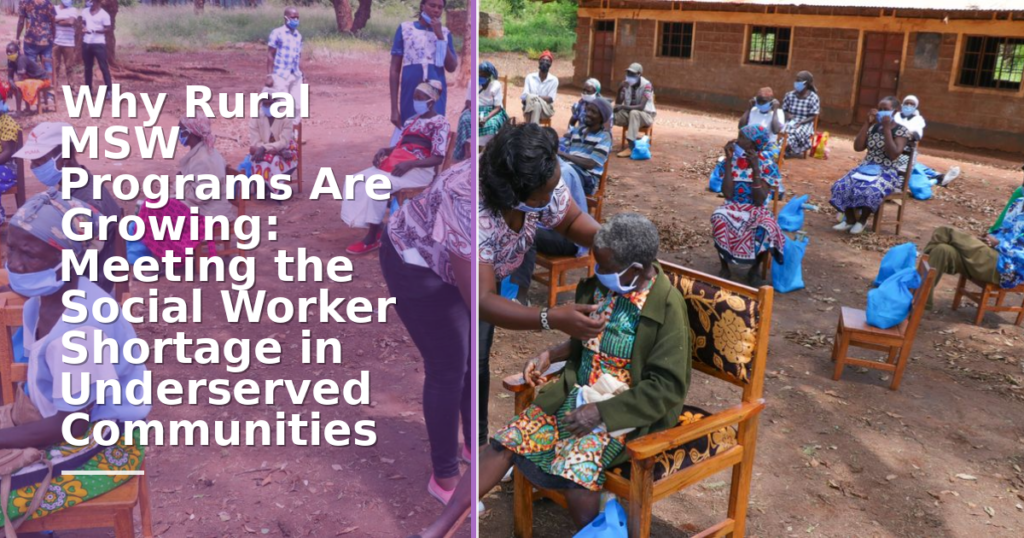
A service obligation channels you into high-need areas where social workers are desperately needed, much like the growth of rural MSW programs in underserved communities. This can accelerate your clinical experience, build a strong professional network, and lead to loan forgiveness or a clear path toward becoming an LCSW after your MSW. However, it also limits your geographic flexibility during those years. Compare the funding amount to the salary you will earn in that setting and decide if the long-term career payoff justifies the commitment.
Questions to Ask Yourself
Social Worker Salary: What You Can Earn in Ohio and Nationwide
The median annual wage for social workers in the United States was $61,330 in 2024, with mean wages around $67,050, according to BLS data. Actual salaries depend on specialization, location, and experience. In Ohio, wages vary by metro area: Cleveland, Columbus, and Cincinnati typically offer higher pay, but individual earnings reflect the specific role and setting.
| Occupation | Total Employment | Annual Median Wage | Annual Mean Wage |
|---|---|---|---|
| Social Workers (All) | 759,740 | $61,330 | $67,050 |
| Child, Family, and School Social Workers | 382,960 | $58,570 | $62,920 |
| Healthcare Social Workers | 185,940 | $68,090 | $72,030 |
| Social Workers, All Other | 64,940 | $69,480 | $74,680 |
Ohio Social Worker Salary Snapshot
Section content unavailable.
2026 MSW Grant Deadlines: A Month-By-Month Calendar
The following grid highlights key 2026 deadlines for major MSW grant and scholarship programs. Contact each program directly to confirm dates, as some 2026 deadlines have not yet been published.

Applying for MSW Grants: Timelines, Eligibility, and Practical Tips
Securing MSW grant funding demands early preparation and attention to detail. Most programs open applications 12-18 months before enrollment, so start researching MSW admission requirements during your BSW or when you first consider graduate school. Align application windows with program start dates: many MSW grants, including Ohio's Behavioral Health Scholarship, accept applications in late winter for fall admission. Mark deadlines on a calendar and set reminders.
Check Eligibility Criteria
While exact requirements vary, common eligibility includes:
- Residency in the funding state or a demonstrated commitment to work there post-graduation.
- Enrollment at least half-time in an accredited MSW program.
- Satisfactory academic progress, often measured by GPA.
- Intent to practice in high-need settings like community mental health centers or federally qualified health centers.
Some scholarships require U.S. citizenship or permanent residency. Verify each grant's terms early; missing a single criterion can disqualify you.
Craft a Strong Application
A compelling personal statement is the heart of your submission. Link your career goals directly to workforce shortage areas. For example, describe how you plan to address rural social work shortages, such as opioid use disorder or child welfare gaps. Secure letters of recommendation from supervisors or faculty who can attest to your behavioral health experience. Complete the FAFSA as soon as it opens: many grants use FAFSA data to confirm financial need.
For program-specific details, contact the grant coordinator directly. They can clarify whether funding covers internship stipends, part-time study, or online learners. A 15-minute call often reveals nuances not on the website.
The surge in targeted MSW funding in 2026, from federal HRSA grants to state scholarships, is removing financial barriers that once kept talented students out of the behavioral health workforce. These awards cover tuition, internship stipends, and other expenses, often eliminating out-of-pocket costs after institutional aid. For prospective students, the next step is clear: visit state directories on mastersinsocialworkonline.org, confirm online eligibility, and weigh service commitments. Then contact financial aid officers and apply early: seats fill quickly.