Points of interest…
- CTA approved $9 million for social service outreach pilots in August 2026.
- Crisis teams on Red, Blue, and Green Lines carry Narcan, care bags.
- Twenty violence intervention specialists work Red Line stations daily without police.
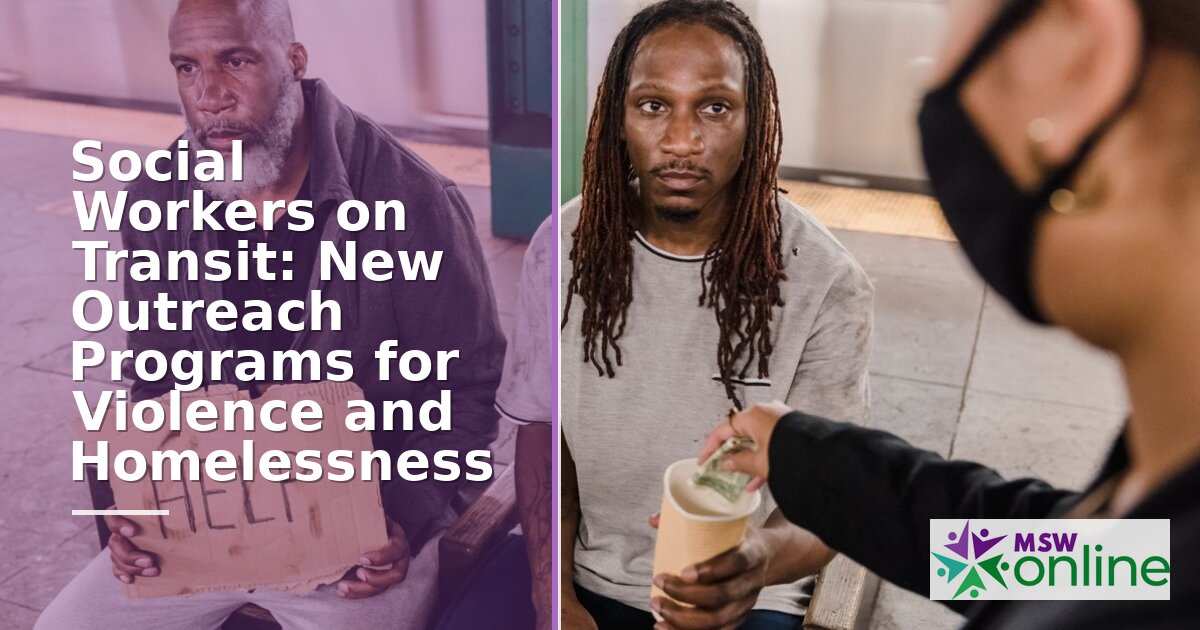
On August 12, 2026, the Chicago Transit Authority board approved $9 million in pilot programs putting crisis intervention teams on Red, Blue, and Green Line trains and stations.1 Teams carry Narcan and hygiene kits, and 20 violence intervention specialists will work daily on the Red Line between Roosevelt and Lake.
That funding marks a concrete shift from police-led response toward trauma-informed care in public space. It expands crisis intervention and macro-level advocacy roles, but also raises dual loyalty questions for social workers who must coordinate with transit security without becoming an extension of law enforcement.
What the CTA’s 2026 Crisis Intervention Pilot Means for Social Work
The Chicago Transit Authority board did more than approve a pilot on August 12, 2026.1 It gave social work a funded mandate to respond to homelessness, substance use, and mental health crises outside clinic walls. The roughly $9.6 million package, documented in the CTA to Spend $9.6 Million on Crisis Intervention Teams article, spreads four nonprofit contracts across the Red, Blue, and Green Lines. Three of the partners run crisis intervention teams with at least two workers each, while the fourth fields a dedicated violence intervention team on the Red Line.
What the Funding Actually Builds
The crisis intervention teams complete de-escalation training for social workers and trauma-informed care preparation, and they carry hygiene kits and care bags that include Narcan.1 A separate contract funds 20 community violence intervention specialists who work daily on the Red Line between Roosevelt and Lake, moving through trains and stations from noon to 3:30 a.m.2 to resolve disruptive behavior without law enforcement.1
The board also renewed a $4.2 million annual outreach agreement with the city's Department of Family and Support Services to connect riders using the CTA as a shelter of last resort with homelessness social work services, and approved an additional $412,500 for at least 30 shelter beds before winter.1
From Values to Infrastructure
For social workers, this is the difference between believing in non-punitive crisis response and having the positions, training, and shelter capacity to make it real. It moves macro-level social justice commitments into a transit agency's budget and daily operations. For community and macro social work practitioners, the transit system becomes a legitimate host site, not an afterthought. MSW students and practitioners watching this pilot should see a clear signal: clinical de-escalation, trauma-informed engagement, and community-based violence intervention are becoming standard public infrastructure, not just pilot language.
What Social Workers on Transit Actually Do
What does a social worker actually do during a shift on a train or platform? The baseline job mirrors federal occupational descriptions: assess needs, connect people to services, and advocate. In transit outreach, that means repeated low-barrier contacts with unhoused or struggling riders across stations, platforms, trains, and buses.
Daily Tasks
Workers perform health and safety checks, de-escalate crises, provide basic supplies such as water, snacks, clothing, and wound care, and record name, date of birth, and pressing needs when riders consent. SEPTA's Day in the Life of an Outreach Worker describes checks as basic as making sure someone is still breathing. Teams carry Narcan. SEPTA deployed it three times in two weeks in early 2023.
Coordination and Documentation
Outreach workers ride or walk alongside transit police and security. Denver RTD clinicians help decide whether an incident is a crisis or a criminal matter and can initiate mental health holds of up to 72 hours.1 Every contact is logged: CTA tracks interactions and outcomes, while SEPTA categorizes engagements, resource distributions, referrals, warm hand-offs, Narcan deployments, and police calls.
Referrals
The work ends in warm hand-offs to shelter, medical, behavioral health, detox, or case management services. CTA's Unhoused Outreach program connected 88 people to housing and 220 to shelter over about 18 months.
Why Transit Agencies Are Turning to Social Workers
Transit agencies face a hard tradeoff: keep sending police to mental health and homeless calls, or fund social work teams whose payoff may show up later in softer outcomes. The CTA's 2026 board approvals land on the second path. Acting CTA President Nora Leerhsen called the package a "historic moment" and cast the agency as a national leader on alternative interventions, betting that trauma-informed outreach can produce better long term results than enforcement alone.
Why the bet is spreading
The strongest evidence comes from street outreach and violence interruption programs, not transit systems themselves. A 2025 meta-analysis of 20 conflict mediation programs found 13, or 65%, reduced violent offenses, while 4 showed increases. A separate systematic review of the Cure Violence approach across 27 program sites found 68.7% of 83 findings pointed toward reduced violence, though only 32.5% were statistically significant. These patterns matter because transit agencies are importing the same mediation and de-escalation logic onto trains and platforms.
What transit-specific data shows
Transit outcome data is thinner. LA Metro's 2026 three year partnership with Los Angeles County Department of Mental Health sets up psychiatric mobile response, co-response, and community ambassador teams, but published materials describe design goals rather than before and after police call reductions. Toronto's TTC posts monthly safety indicators online, yet no analysis ties changes directly to social work outreach. An LA Metro ambassador pilot reported improved rider satisfaction and perceived safety, while noting the lack of firm causal data.
The operational case
Without hard assault reductions, agencies fund these roles for cost avoidance, fewer police dispatches, stronger rider trust, and more humane homeless and mental health responses. The honest limitation is evaluation. Transit agencies need tracking to prove social work-led outreach reduces 911 calls, use of force, and shelter exits while improving service connections. Without that, the growing funding commitment rests partly on values and promising analogous evidence.
The numbers tell the story: $9 million in new pilot programs, a renewed $4.2 million annual outreach agreement, and dedicated shelter beds are durable investments, not public relations. This funding operationalizes social work values of dignity, social justice, and non-punitive care in a public system.
Other U.S. Transit Outreach Programs to Know
Across the U.S., transit agencies are building civilian outreach teams that pair de-escalation with service connections. These programs differ in scale and staffing, from ambassador models to multidisciplinary housing outreach. The examples below show how social work skills are being embedded in daily transit operations.
| Program | Transit Agency | Staffing Model | Focus Population | Reported Outcome or Funding |
|---|---|---|---|---|
| SEPTA SCOPE Program | Southeastern Pennsylvania Transportation Authority (SEPTA) | Contracted outreach specialists under a newly created Outreach Services Department, with up to 88 Guides approved for one year and two option years. | Vulnerable people seeking refuge on the system, including riders experiencing homelessness, mental illness, addiction, or other vulnerability conditions. | Board approved contracts for up to 88 Guides; a specific dollar amount was not stated in the cited approval. |
| Denver RTD Homelessness Outreach | Regional Transportation District (RTD), Denver | A homelessness outreach coordinator hired in January 2022, supported by a grant-funded Navigator position for mental health and homelessness outreach. | People experiencing homelessness on or near the RTD system, including those with mental health needs. | Funded for one year by a grant supporting the Navigator position; no dollar amount specified. |
| BART Homelessness Outreach and Crisis Intervention | Bay Area Rapid Transit (BART) | Ten transit ambassadors and 20 crisis intervention specialists tasked with de-escalating situations and offering shelter beds and resources. | Unhoused individuals on or near the Bay Area transit system needing shelter beds and other support services. | Two-year outreach program cost $350,000; one person obtained shelter according to the inspector general, while about 2,300 people accepted referrals last year. |
| LA Metro Multidisciplinary Homeless Outreach Teams (MDTs) | Los Angeles County Metropolitan Transportation Authority (LA Metro) | 24 multidisciplinary teams, 19 active, operated by six community-based organizations and paired with security, law enforcement, and ambassadors; weekday and weekend coverage with 24-hour service on selected lines. | People experiencing homelessness on the Metro system needing enrollment in services and housing placements. | From July 2023 through April 2024, recorded 4,540 new HMIS enrollments, 1,388 interim housing placements, 313 permanent housing placements, and 1,701 total housing placements, reaching 176% of the annual housing goal. |
Related Articles
Transit social workers face a dual loyalty: they must protect client confidentiality while coordinating with transit security, without becoming an extension of law enforcement.
Salary and Employment Context for Social Workers in Outreach Settings
National wage data offers a useful benchmark for social work roles that may include transit outreach. Because transit-based positions are not separately classified, they typically fall within broader social work categories such as Social Workers or Social Workers, All Other. The table below summarizes employment and wage estimates from the U.S. Bureau of Labor Statistics for 2024.
| Occupation | Total Employment | Mean Annual Wage | 25th Percentile Wage | Median Annual Wage | 75th Percentile Wage |
|---|---|---|---|---|---|
| Social Workers, All Other | 64940 | 74680 | 52010 | 69480 | 95390 |
| Social Workers | 759740 | 67050 | 48680 | 61330 | 78500 |