
Points of interest…
- UNC-Chapel Hill’s BSW launches Fall 2027 with a 75-student cap.
- North Carolina projects a 5,800+ social worker shortage by 2030.
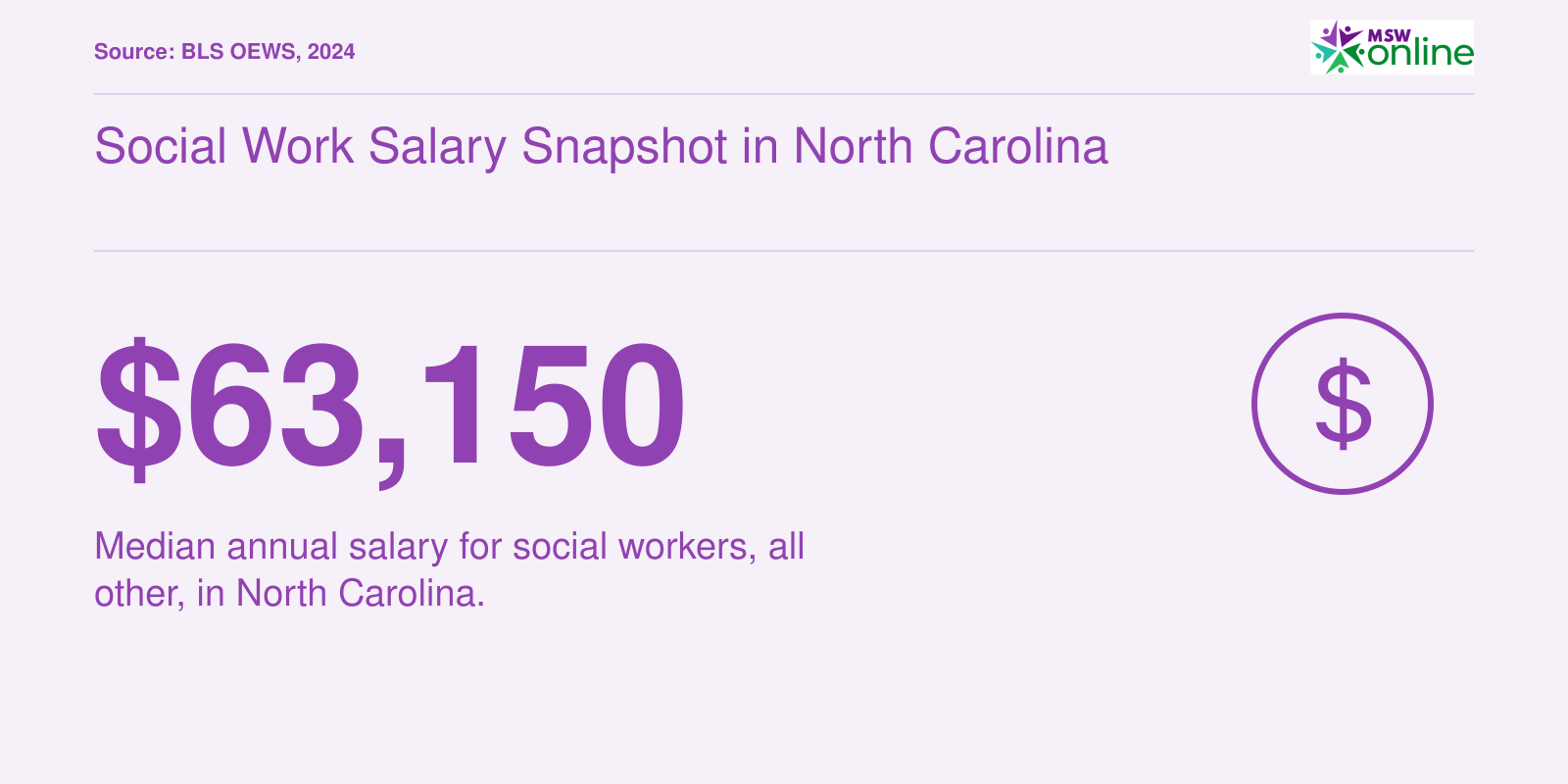
- North Carolina social workers earn a median $63,150 salary.
Demand for social workers in North Carolina is outrunning supply by thousands of positions, yet the number of bachelor-level graduates entering the field each year remains flat. UNC-Chapel Hill's newly approved Bachelor of Social Work program, launching its first full cohort in Fall 2027, is a direct response to a projected deficit exceeding 5,800 licensed professionals by 2030.1 The 120-credit curriculum includes 400 hours of supervised field placement, qualifying graduates for immediate licensure and entry-level roles in child welfare, case management, and behavioral health. With a hard enrollment cap of 75 students, this undergraduate pathway is as selective as it is direct.
The New Unc-Chapel Hill BSW: Timeline and Launch Plans
UNC-Chapel Hill's Bachelor of Social Work (BSW) is a newly approved undergraduate social work degree program designed to help fill critical workforce gaps across North Carolina. The program will launch its first full cohort in Fall 2027, a date confirmed after final approval from the UNC Board of Governors in 2026.1 Earlier discussions had mentioned a possible Fall 2026 start, but the official timeline now provides a clear path forward.
Application Timeline and Admission
The application window opens in Fall 2026 for the inaugural class beginning in Fall 2027. Prospective students can use this lead time to complete any prerequisite coursework and prepare their submissions. The university set an initial enrollment cap of 75 students to ensure high-quality instruction and robust field placement experiences from day one.1 Introductory courses became available as early as January 2026, allowing interested students to explore the curriculum before formally applying.
Accreditation Pathway
As a brand-new program, the BSW is not yet accredited but is actively pursuing candidacy status through the Council on Social Work Education (CSWE).2 Programs typically achieve candidacy before the first cohort enrolls, and full accreditation is granted retroactively to that cohort once all standards are met upon graduation.2 This timeline means students entering in 2027 can expect their degree to hold full CSWE accreditation, a requirement for social work licensure in North Carolina and most states.2
Why North Carolina Needs More Social Workers: The Workforce Shortage Explained
North Carolina's social work workforce is at a breaking point, with shortages deepening across both rural and urban counties.
By 2030, the state is projected to have a shortage of over 5,800 social workers, earning a C, workforce grade.1 The overall behavioral health pipeline gap is larger: the state will need roughly 30,000 additional workers to meet demand.2 Social workers make up 45% of North Carolina's graduate-level behavioral health workforce3, so their shortage heavily impacts mental health and substance use services. Right now, only half of licensed clinical social workers hold public mental health credentials4, limiting access to care for vulnerable populations.
Geographic Disparities in Access to Care
The shortage hits non-metro counties hardest. While metro counties average 9.95 licensed clinical social workers per 10,000 residents, rural counties have just 4.98 per 10,0005, a gap that underscores the challenges of rural social work. Three counties have no licensed clinical social workers at all4, and six have fewer than two per 10,0008. In fact, 97 of North Carolina's 100 counties are designated as behavioral health workforce shortage areas.6
Vacancy Rates and System Strain
Job vacancy rates reflect the strain. Nationally, 10 to 40 percent of child welfare social work positions sit unfilled.1 In North Carolina, vocational rehabilitation counselors faced a 23 percent vacancy rate as of 2026.7 These gaps slow service delivery and increase caseloads for remaining workers, contributing to social worker burnout and making it harder to meet the needs of children, families, and individuals seeking care.
North Carolina's Department of Health and Human Services warns that the state faces a critical shortage of social workers, with demand projected to grow much faster than the number of licensed professionals entering the field each year.
How Unc-Chapel Hill’s BSW Compares to Other UNC System Programs
UNC‑Chapel Hill’s new Bachelor of Social Work joins a network of BSW programs already offered within the UNC System. While full program details for the Chapel Hill launch are still emerging, this side‑by‑side view provides the latest confirmed information. Data for the established programs at UNC‑Charlotte, UNC‑Greensboro, and UNC‑Pembroke is being gathered and will be added to the comparison as it becomes available, giving prospective students a clear picture of how these in‑state options stack up.
| Program | Location | Format | Required Field Hours | Areas of Specialization | Program Length | In-State Tuition & Fees (2024–2025) |
|---|---|---|---|---|---|---|
| UNC-Chapel Hill BSW | Chapel Hill, NC | On‑campus (hybrid or online options under review) | Not yet announced | Not yet announced | Two years (60 credits, post‑associate degree or equivalent transfer) | $7,020 (estimated full‑time, per year) |
| UNC‑Charlotte, UNC‑Greensboro, UNC‑Pembroke BSW programs | Charlotte, Greensboro, Pembroke (NC) | Information being compiled | Information being compiled | Information being compiled | Information being compiled | Information being compiled |
BSW Curriculum and Field Education: What to Expect
The 400 hours of supervised field education sit at the core of UNC-Chapel Hill’s planned Bachelor of Social Work. As a CSWE-accredited generalist program in development, the degree requires 120 total credit hours, blending the university’s IDEAs in Action general education framework with social work foundation courses.1
Social Work Core Courses
Students can expect a curriculum built around the nine CSWE competencies, covering human behavior in the social environment, social welfare policy and services, research methods, and generalist practice with individuals, families, groups and communities. Classes will emphasize ethical decision-making, diversity, and social justice throughout the sequence.
Field Placement Model
The 400-hour field practicum, a social work field placement, matches CSWE’s accreditation standard.1 Placements are arranged in community agencies, schools, hospitals, or government settings across North Carolina. Students work under the supervision of a licensed social worker, applying classroom knowledge to real client situations. This hands-on experience prepares graduates for entry-level generalist practice and sets the foundation for advanced standing in an MSW program.2
Possible Emphasis Areas
While the full curriculum is still being finalized, UNC-Chapel Hill’s strong MSW reputation and the state’s workforce needs suggest the BSW may highlight integrated behavioral health, rural practice, and child welfare contexts. Formal emphasis tracks could be announced as the program’s 2027 enrollment start approaches.
With a BSW, you can step directly into entry-level positions in case management, child welfare, community outreach, or behavioral health. The program's required field placement often doubles as on-the-job training, letting you build practical skills and professional connections from day one.
Admission Requirements and How to Apply
Social work programs across North Carolina are seeing rising demand, prompting universities to expand access through clearer admissions pathways. For UNC-Chapel Hill's newly approved BSW, formal admissions criteria are still being finalized.1 The program will be capped at 75 students,2 suggesting a competitive process. While specific prerequisites and GPA cutoffs are not yet published, applicants can look to UNC System undergraduate admission requirements: a minimum 2.5 GPA, with ACT (minimum 17) or SAT (minimum 930) scores required for students in the 2.50-2.79 GPA range. Transfer pathways are expected to include articulation from North Carolina community colleges, though details are pending. In comparison, other UNC campuses outline clearer prerequisites: for example, UNC Charlotte's BSW admission criteria include courses in biology, psychology, sociology, and introductory social work, while UNC Greensboro's BSW program requirements mandate specific social work courses and a 2.5 GPA for upper-division admission. Prospective students should monitor the UNC-Chapel Hill undergraduate admissions page for the BSW application deadlines and specific criteria as they are released.
BSW vs MSW: Choosing the Right Path for Your Social Work Career
Choosing between a BSW and an MSW often comes down to how soon you want to enter the field; the social worker licensure timeline by state varies, but a BSW gets you licensed faster. Meanwhile, an MSW is the gateway to independent clinical practice and higher-level positions.
Licensure and Career Scope
A BSW qualifies you for the Licensed Baccalaureate Social Worker (LBSW) credential in North Carolina, allowing you to work in case management, community outreach, and non-clinical roles. The MSW, followed by supervised experience, leads to the Licensed Clinical Social Worker (LCSW) credential; understanding the difference between MSW and LCSW clarifies that this permits independent practice and psychotherapy. MSW-trained social workers also move more readily into administrative, supervisory, and policy positions. If your goal is to provide mental health counseling or run a private practice, you will eventually need the MSW.
Advanced Standing: The BSW-to-MSW Fast Track
For BSW holders, UNC system schools offer advanced standing MSW programs that shorten the path to clinical licensure. Because a CSWE-accredited BSW covers foundational content, these programs waive a significant number of credits, often leaving 30 to 40 credits to complete1 instead of the standard 60-plus2. Here is how two UNC universities structure their advanced standing options:
- UNC-Chapel Hill (campus): 12-month full-time or 20-month part-time program1, requiring 600 clinical hours1 and a 3.0 GPA3. Applicants must have a BSW from a CSWE-accredited program3, at least 400 field hours3, and a B or higher in all social work courses3.
- UNC-Chapel Hill (online): 40-credit4, 20-month4 online advanced standing MSW. A bridge program (13 credits)5 is available for those who need to update their BSW knowledge.
- UNC Charlotte (online): A 12- or 24-month6 online advanced standing MSW, also requiring a 3.0 GPA6 and a BSW earned within the past seven years6.
These pathways let you earn your MSW in roughly half the time, making them some of the most efficient accelerated MSW programs available, which saves both tuition and opportunity costs.
Which Path Fits Your Career Goals?
If you want to enter the workforce quickly and see yourself in non-clinical roles, a BSW is a direct, cost-effective choice. If you are certain you want to become a clinical social worker, pursuing the BSW first and then leveraging advanced standing is a strategic route that reduces the total time and expense of graduate education. Many students also choose the BSW as a stepping stone, gain work experience, and later return for their MSW online or part-time while employed, and how to choose an online MSW program can help guide that next step.
Questions to Ask Yourself
Online and Flexible BSW Options Across North Carolina
On-campus vs online: the format you choose shapes how you balance school with work, family, and field placements. While UNC-Chapel Hill’s new program will offer core classes on campus, other universities in the state deliver BSW coursework partially or fully online.
Many North Carolina institutions design their BSW for students who need to keep a job or live far from campus. When you visit a school’s social work department page, look for keywords like “online BSW,” “hybrid,” or “part-time enrollment.” Pay attention to field practicum requirements: even fully online degrees require in-person internship hours, and some have geographic restrictions on placement sites, a challenge that rural MSW programs have addressed. Accreditation matters: confirm the program holds CSWE recognition to ensure your credits transfer and count toward the requirements for how to become a social worker.
For a wider picture of the profession, consult BLS.gov for social worker employment and wage data broken down by region and industry. Professional associations such as NASW’s North Carolina chapter often list CE opportunities and can point you toward local programs. If a website does not spell out flexibility clearly, call the admissions office: ask about cohort models, weekend intensives, or evening sections. Building a shortlist of programs that fit your schedule takes a bit of digging, but starting with each UNC system school’s social work page and confirming CSWE status gives you a reliable, authoritative foundation.
Cost of a BSW in the UNC System and Financial Aid Opportunities
Planning for college costs starts with understanding where the numbers live, not just what they are. Tuition and fees for a BSW within the UNC system vary by campus, residency status, and delivery format, so the most reliable figures come directly from official university websites. Financial aid offices at each school maintain up-to-date breakdowns of per-credit and per-semester expenses, including any distance-education differentials that may apply to online or hybrid cohorts.
Finding Tuition and Fees
Avoid relying on third-party aggregators; instead, search for the "cost of attendance" page on each UNC campus offering a BSW. These pages typically separate direct charges from estimated indirect costs like books and living expenses. Look for program-specific fee schedules, because social work programs sometimes carry small professional development or technology fees not reflected in general tuition tables.
Exploring Financial Aid
Complete the Free Application for Federal Student Aid (FAFSA) early to determine eligibility for federal grants, work-study, and loans. State-level resources such as the North Carolina Need-Based Scholarship can supplement federal aid. Many schools also list grants for social work students and scholarships funded by alumni or local nonprofits; these often require a separate application and an essay on your commitment to the field. Professional associations like the National Association of Social Workers (NASW) maintain searchable scholarship databases worth monitoring. For those planning to serve in high-need areas, the Health Professions Loan Repayment Program and similar state-based initiatives may reduce debt after graduation.
Weighing the Investment
To gauge whether the cost aligns with your career goals, compare program expenses against earnings data and demand trends. The Bureau of Labor Statistics (BLS) publishes occupation-specific wage estimates and projections for fastest-growing social work jobs that can help you model long-term return on investment.
Social Work Salary Snapshot in North Carolina
North Carolina employs over 20,000 social workers across multiple specialties. The median annual wage for the broad category of social workers is $63,150, according to 2024 data from the Bureau of Labor Statistics.
Salary by Metro Area in North Carolina
The table below shows median annual salary and total employment for child, family, and school social workers across major metro areas in North Carolina. Metros like Durham-Chapel Hill and Raleigh offer salaries above the regional median, while Charlotte employs the largest number of professionals in this field.
| Metro Area | Median Annual Salary | Total Employment |
|---|---|---|
| Charlotte-Concord-Gastonia | $60,670 | 4,000 |
| Raleigh-Cary | $62,540 | 1,550 |
| Greensboro-High Point | $54,980 | 880 |
| Durham-Chapel Hill | $60,360 | 810 |
| Fayetteville | $50,070 | 630 |
| Winston-Salem | $54,430 | 580 |
| Hickory-Lenoir-Morganton | $58,970 | 550 |
| Wilmington | $62,350 | 530 |
| Asheville | $57,550 | 520 |
| Greenville | $54,790 | 320 |
Common Questions About UNC’s New BSW Program and Social Work Education in North Carolina
Prospective students often have questions about UNC-Chapel Hill's new Bachelor of Social Work program and social work education in North Carolina. Below are answers to some of the most common inquiries, from program start dates to licensure distinctions.